Farmer field schools: cultivating collaborative innovation for synergies in water, energy and food security in Uganda
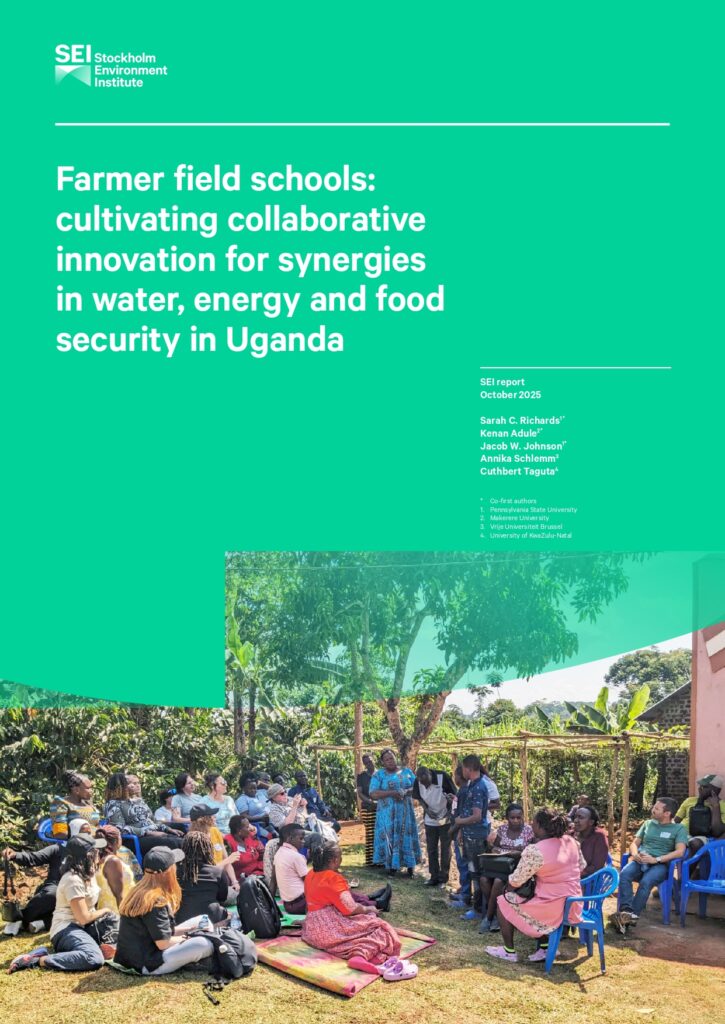
In the specific context of Uganda, this report highlights the key benefits of farmer field schools and provides recommendations for policymakers to support and scale up initiatives at the district level. A district-level focus is valuable because it aligns with existing governance structures and facilitates integration into broader development plans, which can accelerate sustainable development […]
Simplexifying Sustainability
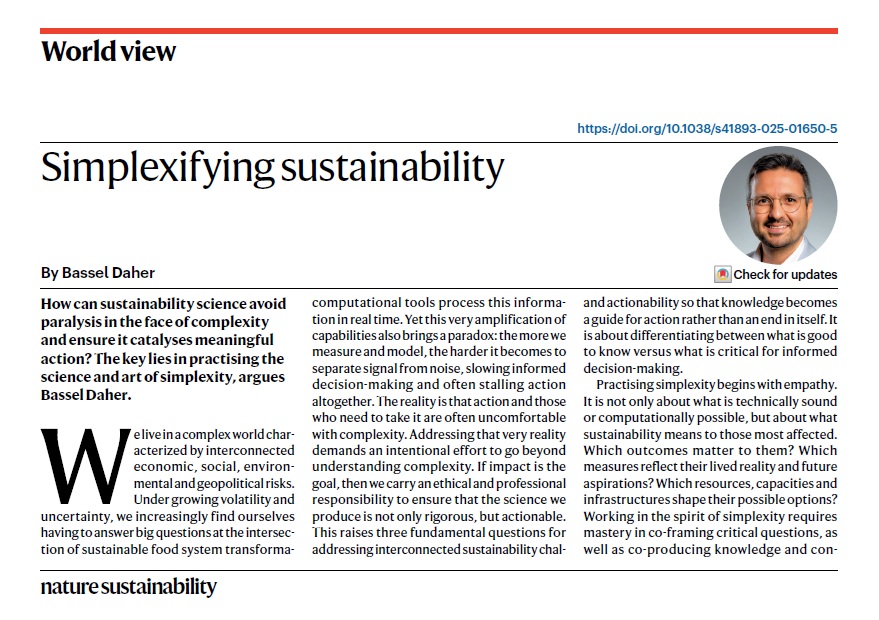
How can sustainability science avoid paralysis in the face of complexity and ensure it catalyses meaningful action? The key lies in practising the science and art of simplexity, argues Bassel Daher. You can find the full article here: https://www.nature.com/articles/s41893-025-01650-5.epdf
Financing the Water-Energy-Food-Ecosystem Nexus project: challenges, opportunities, and pathways for sustainable investment
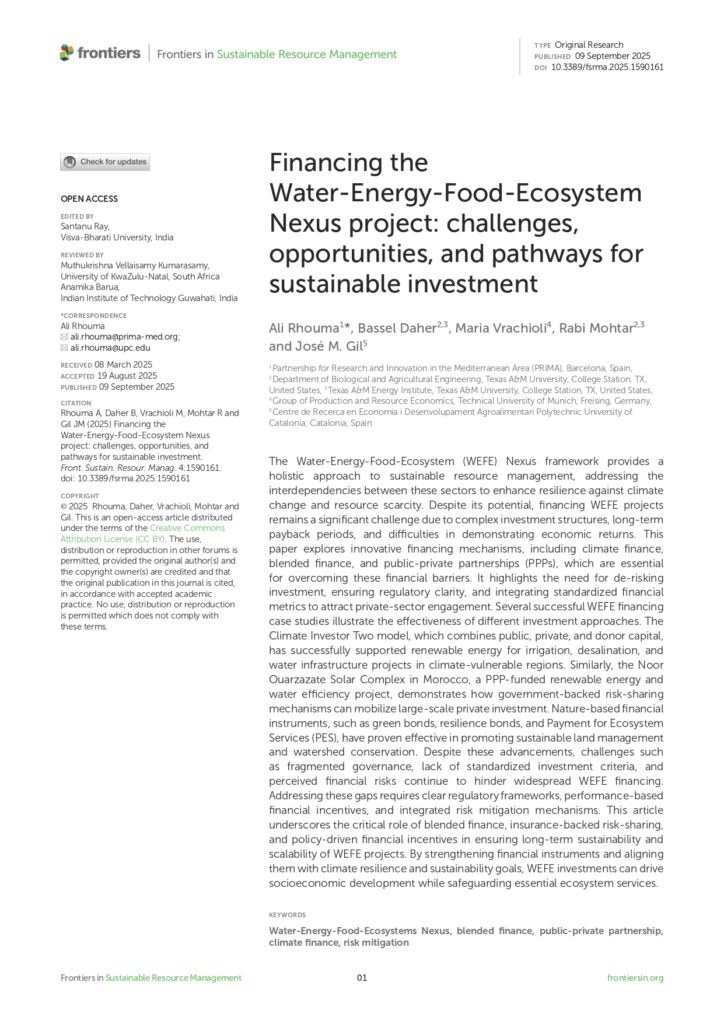
The Water-Energy-Food-Ecosystem (WEFE) Nexus framework provides a holistic approach to sustainable resource management, addressing the interdependencies between these sectors to enhance resilience against climate change and resource scarcity. Despite its potential, financing WEFE projects remains a significant challenge due to complex investment structures, long-term payback periods, and difficulties in demonstrating economic returns. This paper explores […]
Fifty years of excellence in water resources research: insights from the most cited articles per decade published in Water International
It has been emphasized since its inception that IWRA is established not to duplicate the functions of many existing organizations but to supplement their activities and to fill in the interdisciplinary voids that occur in the professional field of water resources. The concept of WATER INTERNATIONAL is therefore to provide broad knowledge and information on […]
Food policy monitoring in the Near East and North Africa region | Digital solutions for small-scale farmers in the NENA region: opportunities and challenges
In the second quarter of 2025, the food security situation in the Near East and North Africa (NENA) region remained fragile due to ongoing conflict, relatively high food prices, and volatile agricultural production. While global food commodity prices showed marginal signs of stabilization, regional inflationary pressures and constrained access to food continued to affect vulnerable […]
Inclusive policy development from the ground up: Insights from the household water-energy-food nexus

Despite substantial contemporary research and a growing trend in exploring the water-energy-food (WEF) nexus, most research efforts have been invested in macro-level supply-side infrastructure and policies. However, prioritizing demand-side management policies can provide new opportunities and untapped potential for addressing interconnected resource challenges. Demand management inherently encompasses users’ consumption patterns, behaviors, socio-economic conditions, and choices, […]
Technology for Disaster Risk Reduction
This special report examines the past, present and future applications of technology in advancing disaster risk reduction (DRR) efforts. By providing detailed explanations, definitions and regional case studies, this report showcases how various technologies have helped bridge critical gaps in data gathering, data processing and disaster risk modelling related to multiple hazards and at different […]
Coproducing water-energy-food Nexus actionable knowledge: Lessons from a multi-actor collaborative learning school in Uganda, East Africa

The water-energy-food (WEF) Nexus is an integrative framework for addressing the multi-scalar interdependencies that challenge sustainability solutions across the water, energy, and food systems. However, challenges linked to scale and data availability often make WEF analyses more theoretical, limiting their ability to offer practical, implementable solutions in policy and decision contexts. This paper introduces Collaborative […]
Farmer field schools: cultivating collaborative innovation for synergies in water, energy and food security in Uganda
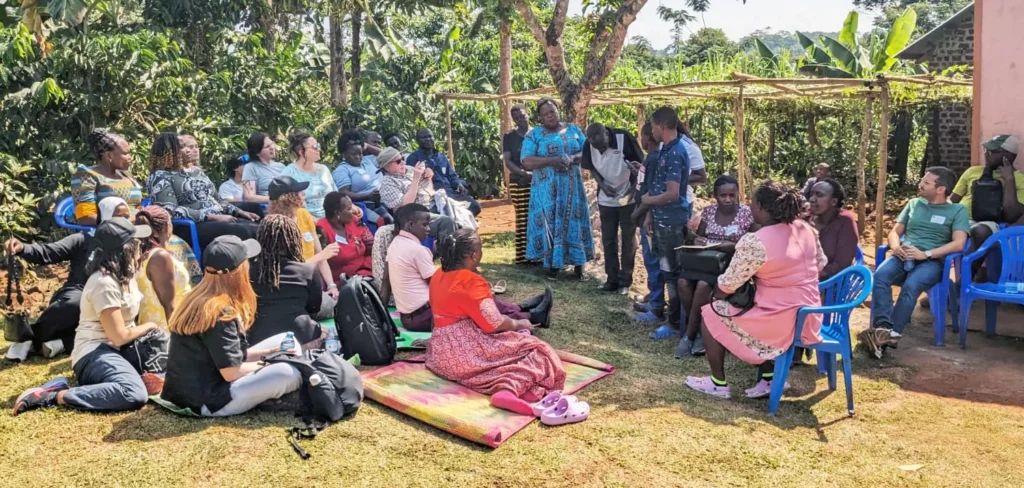
In the specific context of Uganda, this report highlights the key benefits of farmer field schools and provides recommendations for policymakers to support and scale up initiatives at the district level. A district-level focus is valuable because it aligns with existing governance structures and facilitates integration into broader development plans, which can accelerate sustainable development […]
Securing Our Future: A Water-Energy-Food Nexus Approach to Climate Risks, Resource Scarcity, and Human Mobility in the Middle East
This book addresses these pressing issues, providing a comprehensive overview of the challenges posed by climate change and their impacts on society. It also presents a series of innovative actions aimed at enhancing the resilience of modern society. The Water-Energy-Food (WEF) Nexus is a critical area of research aimed at building a more sustainable society. […]