Multi-stakeholder Dialogue: Water-Energy-Food (WEF) Nexus and Implementing the SDGs
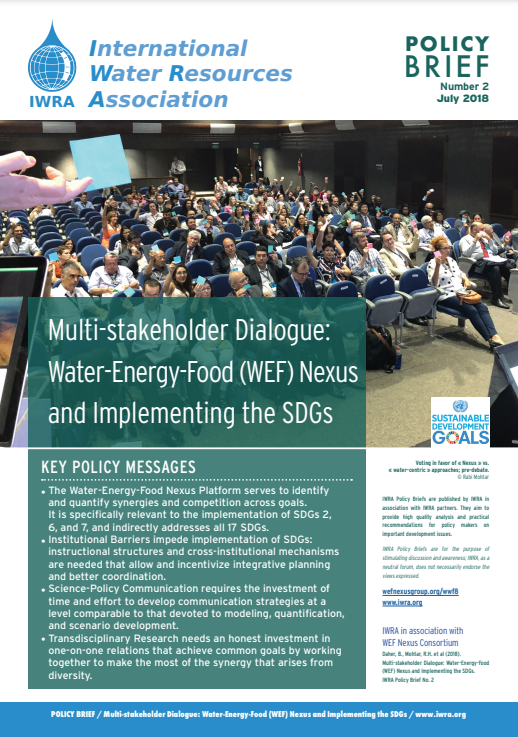
Building on the strong policy messages and momentum established through a growing coalition of global partners at the Stockholm World Water Week (2016) and the XVI World Water Congress in Cancun (2017), the World Water Forum in Brasilia (2018) hosted a High Level Panel (HLP) linked to the theme of Development (Water for Sustainable Development), […]
Water–energy–food nexus: a platform for implementing the Sustainable Development Goals

This high- level panel was partially supported by the Texas A&M WEF Nexus Initiative, BMZ, European Union, and respective co-author institutions (American University of Beirut, OCP Policy Center, University of Zaragoza, Global Environmental Facility, Circle of Blue, Stockholm Environment Institute, National Scientific and Technical Research Council, International Commission on Irrigation and Drainage, World Bank, and […]
Developing Socio-Techno-Economic-Political (STEP) Solutions for Addressing Resource Nexus Hotspots
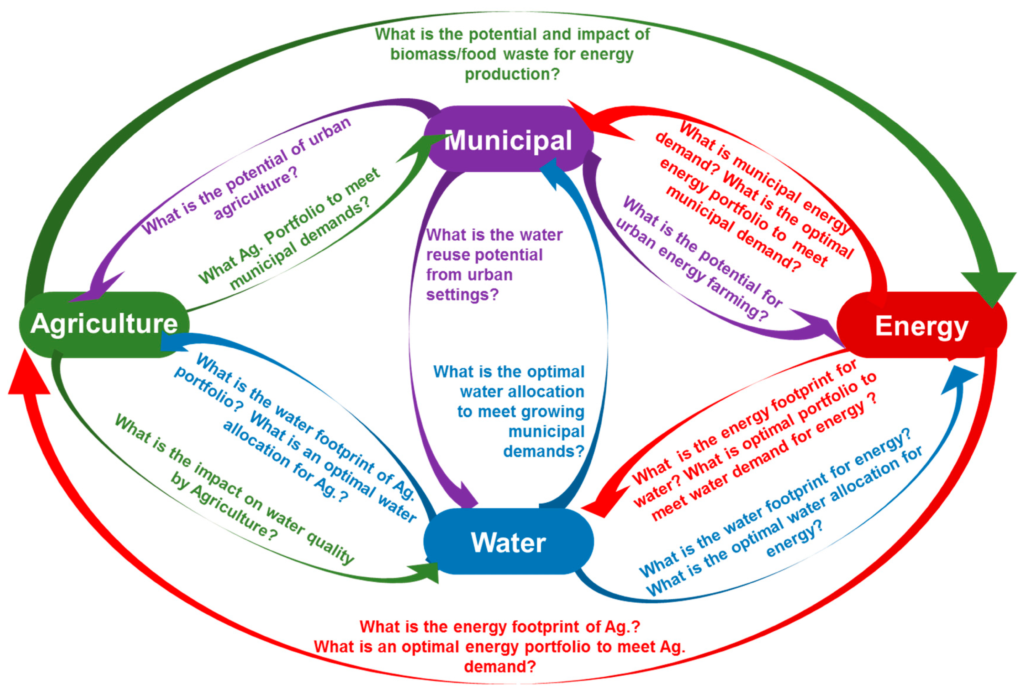
The challenge of meeting increasing water, energy, and food needs is linked not only to growing demands globally, but also to the growing interdependency between these interconnected resource systems. Pressures on these systems will emerge to become hotspots with different characteristics, and will require a fresh look at the challenges existing both within each of […]
WATER-ENERGY-FOOD NEXUS STAKEHOLDER INFORMATION SHARING AND ENGAGEMENT WORKSHOP
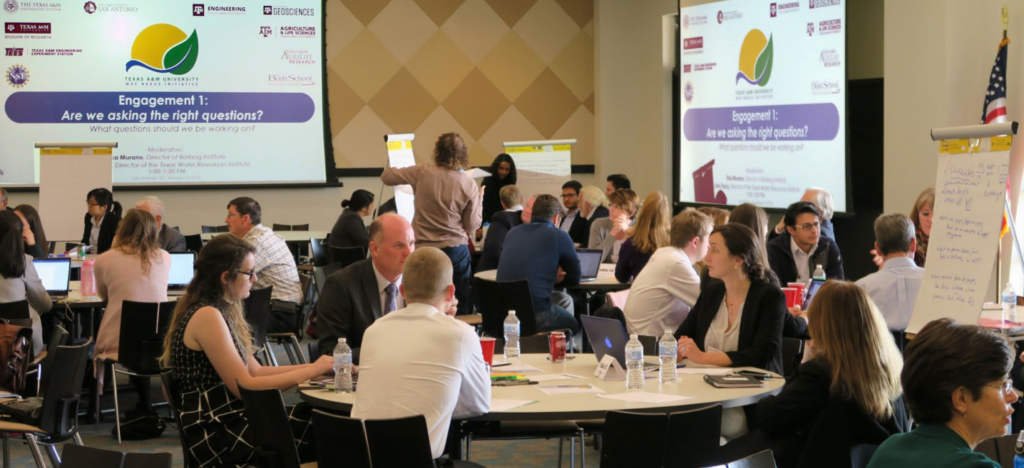
The interconnection of water, energy, and food resources is complex, with the availability of these resources increasingly stressed by climatic, social, political, economic, demographic, technologic, and other pressures. Addressing these challenges requires a better understanding of the nexus formed by the interconnections between the resources. On January 10, 2018, the Texas A&M University System WaterEnergy-Food […]
Sustainability in the Water-Energy-Food Nexus Bridging Science and Policy Making
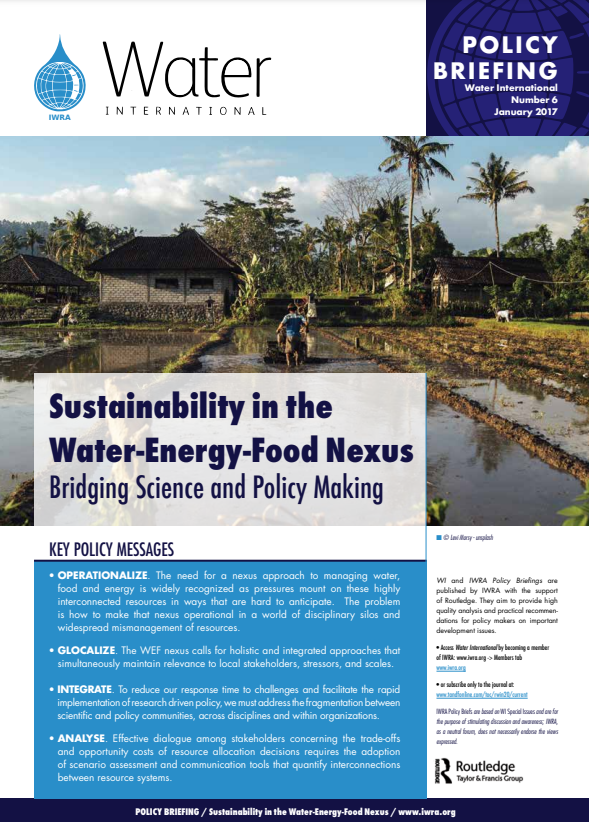
Water, energy, and food security underpin nations’ well-being, and global sustainability. Awareness of the tight interconnections between these three resource systems is not new. Nevertheless, a combination of intensifying demands on resources, increasing uncertainty of external pressures, and resource scarcity have intensified the interlinkages and amplified the cost of inaction and mismanagement. Policy decisions made […]
Current Water for Food Situational Analysis in the Arab Region and Expected Changes Due to Dynamic Externalities
Uneven distribution of water, food, and energy (WEF) resources, together with demographic, geographic, political, and other natural constraints, burden WEF security plans in many regions of the world. Decision makers are under pressure to bridge the WEF supply-demand gap, and often propose reactive, rather than preventive, strategies that are associated with uncertainty, challenges of sustainability, […]
Modeling the Water-Energy-Food Nexus: A 7‐Question Guideline
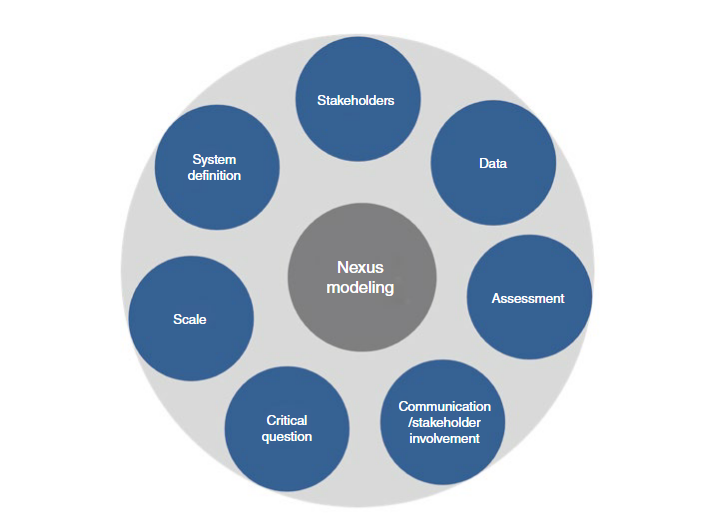
Water, energy, and food resource systems are under increasing stress. As we prepare to move toward more sustainable resource allocation and management strategies, it is critical that we quantify and model the interconnections that exist between these sectors. Such action will help guide decision making and planning for the future of these resources and related […]
Security, climate change, and the resource nexus
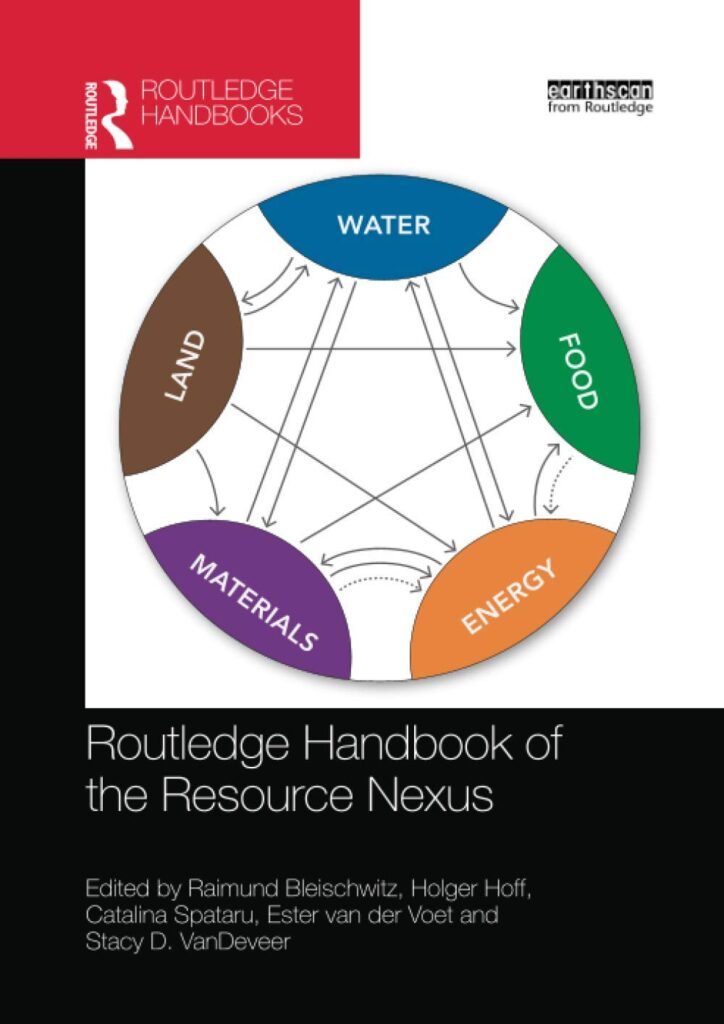
This chapter presents major nodes of research and analysis around climate change and security linkages, around more attempts to link security to the resource nexus, and the need to position equity and justice-related concerns at the center of the complex perspectives. It explores a broad view of security at national, regional, and global scales, which […]
Governance of the Water-Energy-Food Nexus: the Conceptual and Methodological Foundations for the San Antonio Region Case Study

Purpose of Review The goal of the case study is to provide an outline of the “governance” group’s approach to conducting research on nexus issues in this case study. Recent Findings A significant part of the Texas A&M Water-Energy-Food Nexus initiative focuses on issues of governance and public policy. The governance and public policy element […]
Beyond zero sum game allocations: expanding resources potentials through reduced interdependencies and increased resource nexus synergies
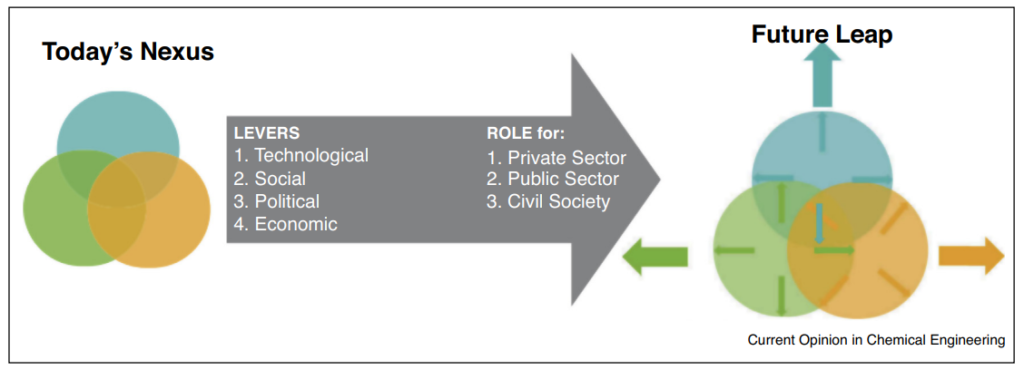
The 2030 goal for the implementation of the Sustainable Development Goals (SDGs) gives rise to challenging questions stemming from the inherent interconnections and potential competition between primary resources. ‘Economic Growth’ and ‘Clean Water and Sanitation’ are intimately related SDGs. Access to quality water is critical to growth, but as economies and populations grow, so does […]