Research Opportunities to Advance Cardiovascular Health through a Planetary Health Lens
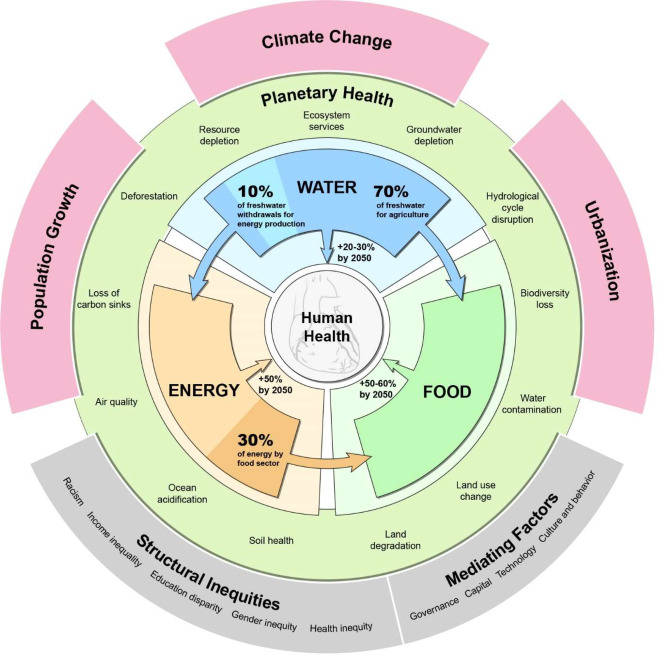
Cardiovascular health (CVH) across the life course requires stable, nurturing environments and a healthy planet. Increasing human demands on the earth’s resources destabilize our world’s ecosystems and compromising CVH. Unique research opportunities for cardiovascular researchers exist at the intersection of planetary and CVH. Using systems thinking can reveal cardiovascular and planetary health connections and mechanisms […]
Synergetic Benefits of Agricultural Sewage Reuse and Floating Photovoltaics in Mexican Wastewater System: A Municipal‐Level WEF Nexus Study
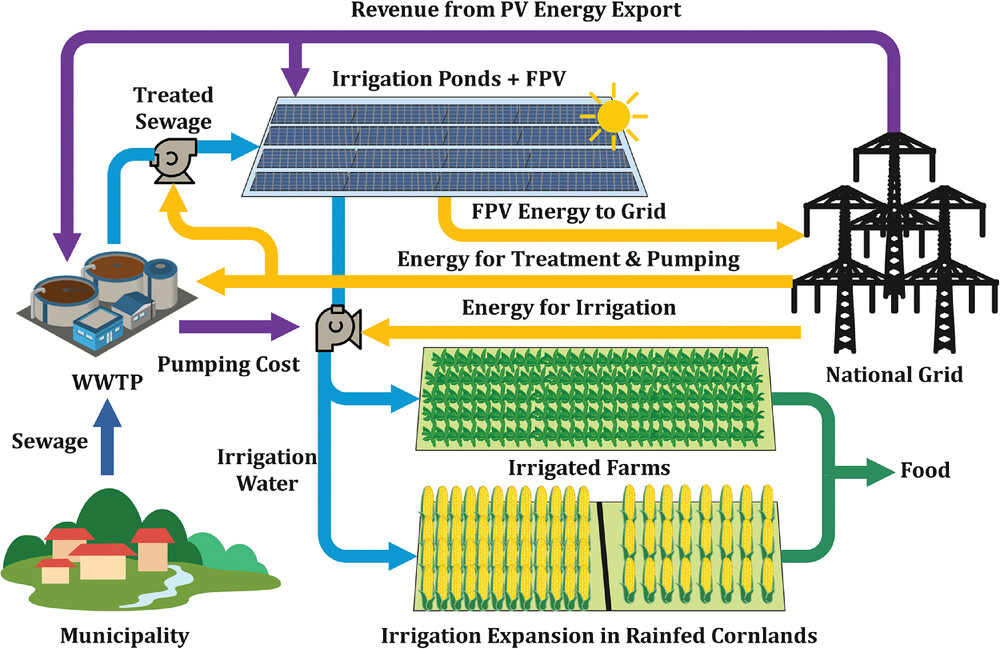
Financial stability is essential for the sustainable operation of wastewater treatment plants (WWTPs), as they require substantial resources but generate minimal revenue. In Mexico, a lack of funding resources and supporting policies has resulted in inefficient treatment and extensive surface water degradation. This work examines the positive impacts of treated sewage-operated irrigation ponds equipped with […]
Integrating Health in the Water-Energy-Food Nexus: A Comprehensive Review of Interdependencies, Challenges, and Future Research Opportunities
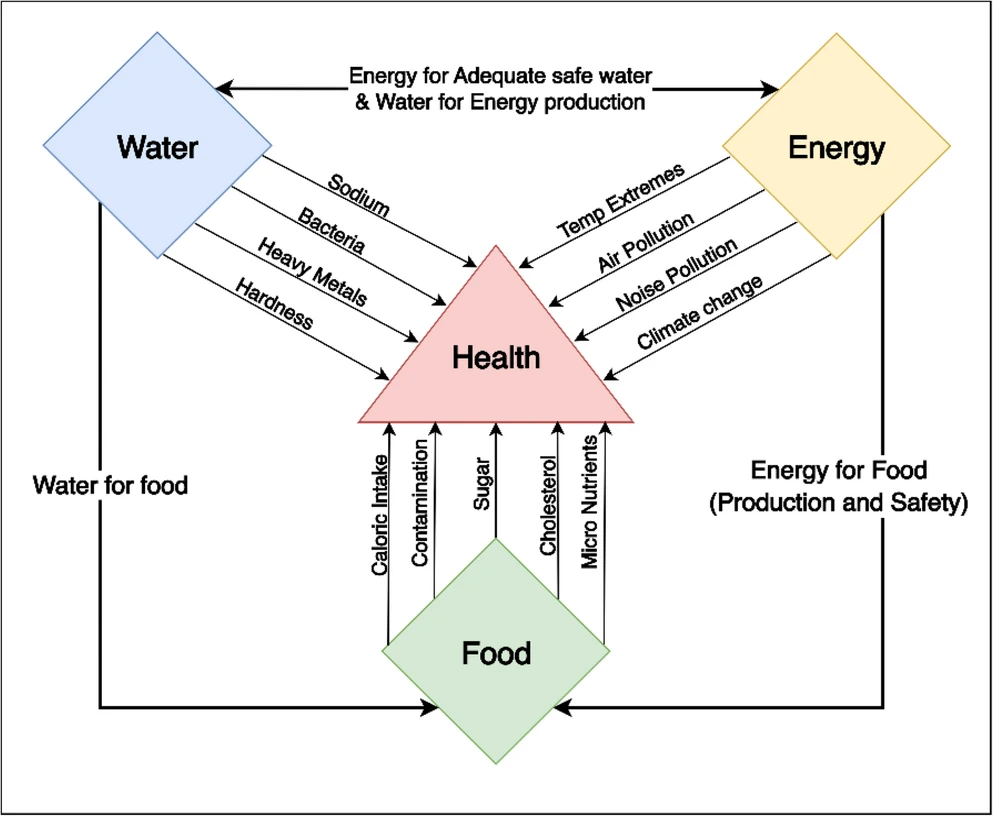
The Water-Energy-Food (WEF) Nexus has become a crucial framework for understanding resource interdependencies, nevertheless its integration with health remains underexplored. This review paper examines the current literature in the Water Energy Food Health (WEFH) Nexus, emphasizing the complex relationships between resource security and public health outcomes. Through a systematic literature review, the existing research trends, […]
Simplexifying Sustainability
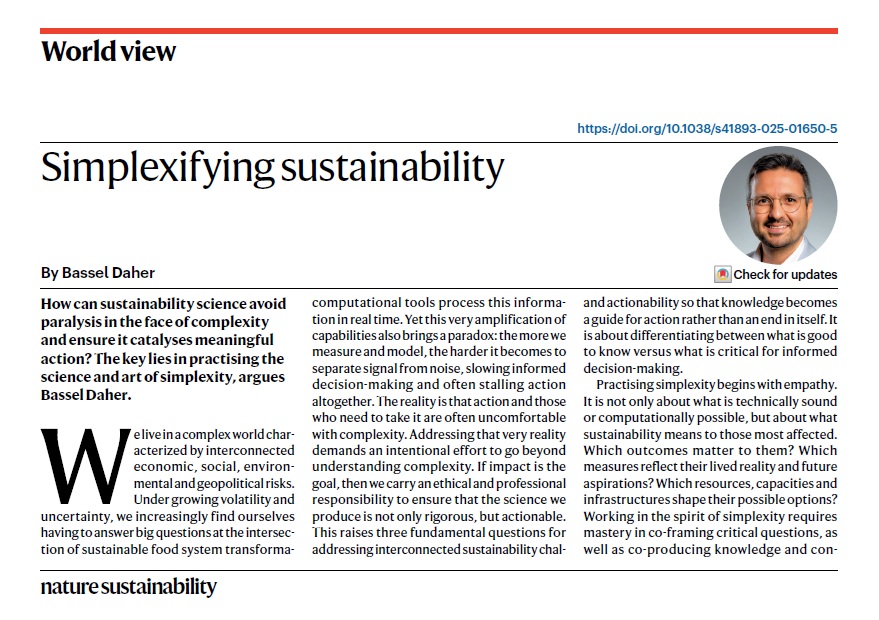
How can sustainability science avoid paralysis in the face of complexity and ensure it catalyses meaningful action? The key lies in practising the science and art of simplexity, argues Bassel Daher. You can find the full article here: https://www.nature.com/articles/s41893-025-01650-5.epdf
Financing the Water-Energy-Food-Ecosystem Nexus project: challenges, opportunities, and pathways for sustainable investment
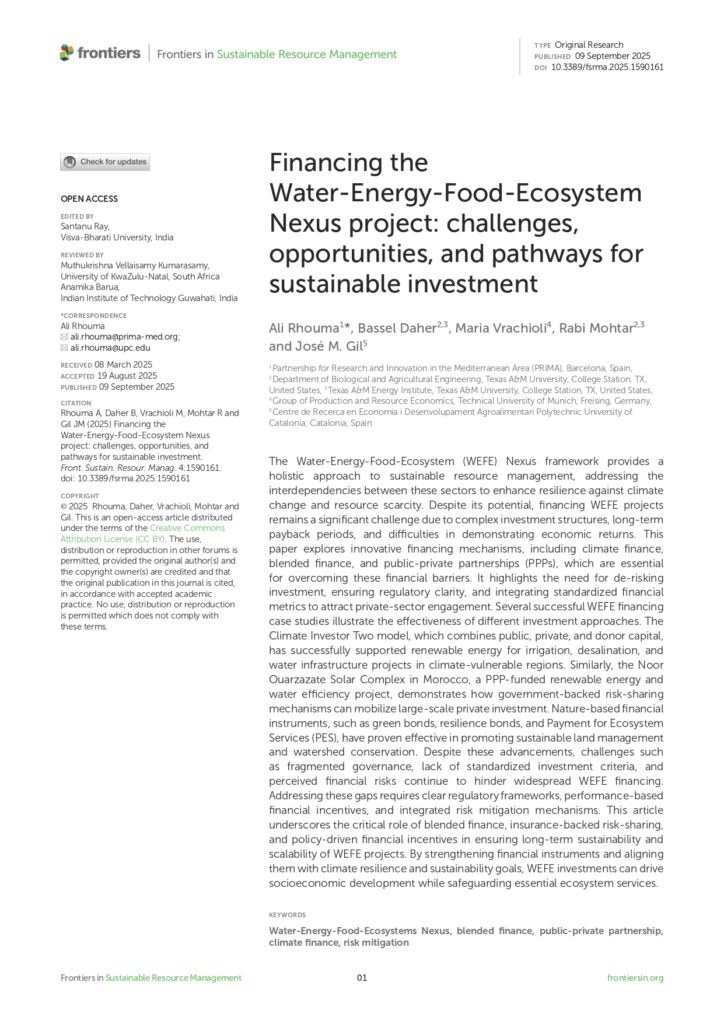
The Water-Energy-Food-Ecosystem (WEFE) Nexus framework provides a holistic approach to sustainable resource management, addressing the interdependencies between these sectors to enhance resilience against climate change and resource scarcity. Despite its potential, financing WEFE projects remains a significant challenge due to complex investment structures, long-term payback periods, and difficulties in demonstrating economic returns. This paper explores […]
Fifty years of excellence in water resources research: insights from the most cited articles per decade published in Water International
It has been emphasized since its inception that IWRA is established not to duplicate the functions of many existing organizations but to supplement their activities and to fill in the interdisciplinary voids that occur in the professional field of water resources. The concept of WATER INTERNATIONAL is therefore to provide broad knowledge and information on […]
Inclusive policy development from the ground up: Insights from the household water-energy-food nexus

Despite substantial contemporary research and a growing trend in exploring the water-energy-food (WEF) nexus, most research efforts have been invested in macro-level supply-side infrastructure and policies. However, prioritizing demand-side management policies can provide new opportunities and untapped potential for addressing interconnected resource challenges. Demand management inherently encompasses users’ consumption patterns, behaviors, socio-economic conditions, and choices, […]
Coproducing water-energy-food Nexus actionable knowledge: Lessons from a multi-actor collaborative learning school in Uganda, East Africa

The water-energy-food (WEF) Nexus is an integrative framework for addressing the multi-scalar interdependencies that challenge sustainability solutions across the water, energy, and food systems. However, challenges linked to scale and data availability often make WEF analyses more theoretical, limiting their ability to offer practical, implementable solutions in policy and decision contexts. This paper introduces Collaborative […]
Quantifying sustainability and resilience in food systems: a systematic analysis for evaluating the convergence of current methodologies and metrics
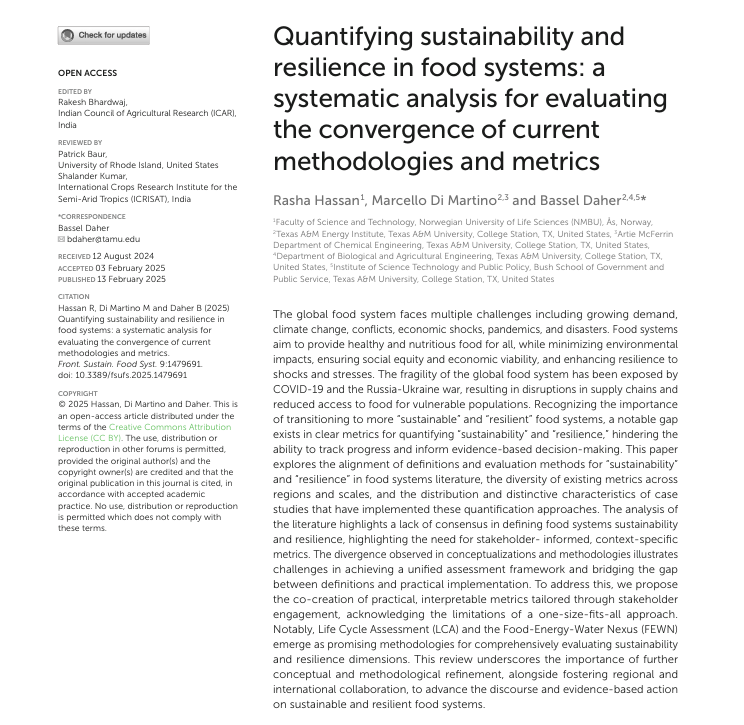
The global food system faces multiple challenges including growing demand, climate change, conflicts, economic shocks, pandemics, and disasters. Food systems aim to provide healthy and nutritious food for all, while minimizing environmental impacts, ensuring social equity and economic viability, and enhancing resilience to shocks and stresses. The fragility of the global food system has been […]
The Exposome and Cardiovascular Health: Webcast December 12 2024
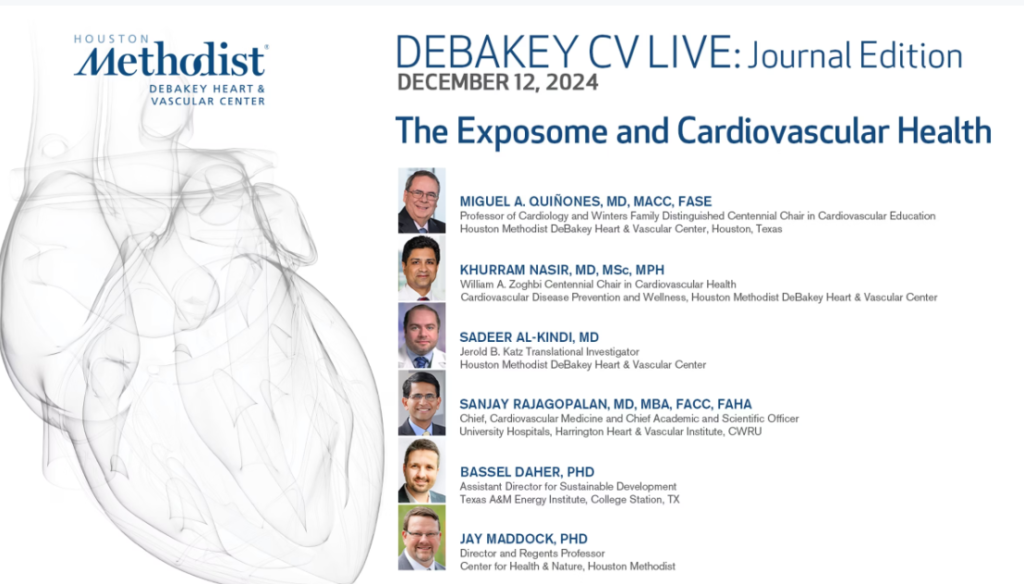
This 61-minute webcast features a conversation about “The Exposome and Cardiovascular Health”—the focus of Issue 20.5. Led by the issue’s editors, the discussion engages the authors on emerging themes and lessons learned while researching and writing the articles. View the video at https://vimeo.com/1027348229 You can find the full article here: https://pmc.ncbi.nlm.nih.gov/articles/PMC11697851/