Global Sustainable Development Report 2015 (Advance Unedited Version) (GSDR 2015)
2015 will be a watershed year for sustainable development. Major international conferences – on financing for development the post-2015 development agenda, and climate change – will take momentous decisions that could, if effectively followed up, have profound implications for the future of our societies, our economies and of our planet. This is the context in […]
Toward understanding the convergence of researcher and stakeholder perspectives related to water-energy-food (WEF) challenges: The case of San Antonio, Texas

In the past decade, research on interconnected resource challenges has primarily focused on quantifying physical resource interconnections, and there is a growing focus on the social, economic, and policy dimensions of these interconnections. While the nature of the complexity of interconnected resource challenges resulted in emphasizing the need for inter- and trans-disciplinary research and in […]
A Water-Energy-Food Nexus approach for conducting trade-off analysis: Morocco’s phosphate industry in the Khouribga region
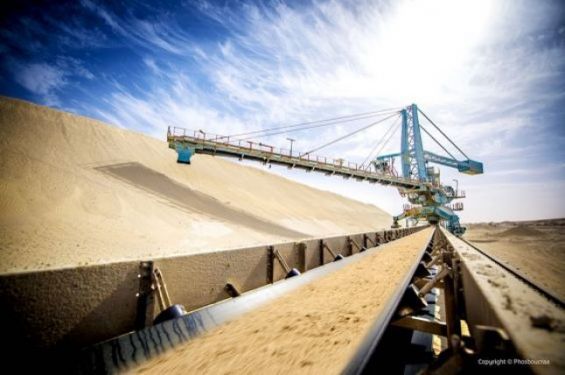
The study objective was to develop and use the Water-Energy-Food Nexus Phosphate (WEF-P) Tool to evaluate the impact of Morocco’s phosphate industry on water, energy, and food sectors of Khouribga, which is the representative phosphate mining region of Morocco. The developed WEF-P Tool enabled a trade-off analysis based on integrating supply-chain processes, transportation, and water–energy […]
Renewable Energy in the Water, Energy & Food Nexus
Renewable energy technologies can address trade-offs between water, energy and food, bringing substantial benefits in all three key sectors. This report from the International Renewable Energy Agency (IRENA) looks at how adopting renewables can ease trade-offs by providing less resource-intensive energy services compared to conventional energy technologies. “Link to full article”
The United Nations World Water Development Report 2020 : water and climate change
The 2020 edition of the United Nations World Water Development Report (UN WWDR 2020) entitled ‘Water and Climate Change’ aims at helping the water community to tackle the challenges of climate change and informing the climate change community about the opportunities that improved water management offers in terms of adaptation and mitigation. The scientific evidence […]
SDSN USA Zero Hunger Pathways Project Submission for the White House Conference on Hunger, Nutrition, and Health
In the 1970’s, after the U.S. significantly reduced poverty, increased economic opportunity, and dramatically expanded federal nutrition safety net programs, the nation almost entirely ended domestic hunger. In the succeeding decades, as poverty increased, real wages decreased, and safety net programs were scaled back, hunger and food insecurity in America soared. Therefore, in 2022 hunger […]
Reimagining Sustainable Community Sports Fields of the Future: a Framework for Convergent Science-Stakeholder Decision-Making

Community-level sports fields are public spaces that provide numerous physical, mental, and societal benefits. These fields are often governed, constructed, managed, and used by various interacting groups who have different value systems and preferences that impact their decisions. While sports fields offer an opportunity for community engagement and physical activity to residents of communities, poor […]
Reflecting on water challenges of the past, present and future: an intergenerational perspective

“Link to full article”
Opportunities and Challenges for Establishing a Resource Nexus Community of Science and Practice

The American Chemical Society’s Division of Environmental Chemistry symposium Toward Creating a Water-Energy-Food (WEF) Nexus Community of Practice, brought together 25 cross-disciplinary speakers in five thematic areas: 1) state of the art models and approaches, 2) WEF Nexus initiatives and case studies, 3) WEF governance and stakeholder engagement, 4) chemical processes and WEF Nexus, 5) WEF education, community, and practice. […]
Food security under compound shocks: Can Lebanon produce its own Mediterranean food basket?

As Lebanon faces compound challenges, a looming food security crisis is rapidly approaching, much of which could be attributed to the lack of long-term planning for sustainability in its agricultural sector. The disconnect between decision-makers within the agricultural sector, and other interconnected sectors is exacerbated by the lack of integrative national platforms and methodologies for […]