Modeling the Water-Energy-Food Nexus: A 7‐Question Guideline
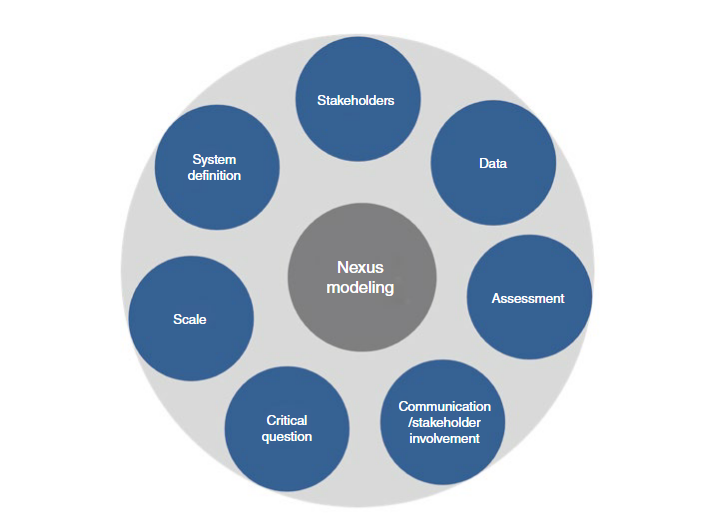
Water, energy, and food resource systems are under increasing stress. As we prepare to move toward more sustainable resource allocation and management strategies, it is critical that we quantify and model the interconnections that exist between these sectors. Such action will help guide decision making and planning for the future of these resources and related […]
Beyond zero sum game allocations: expanding resources potentials through reduced interdependencies and increased resource nexus synergies
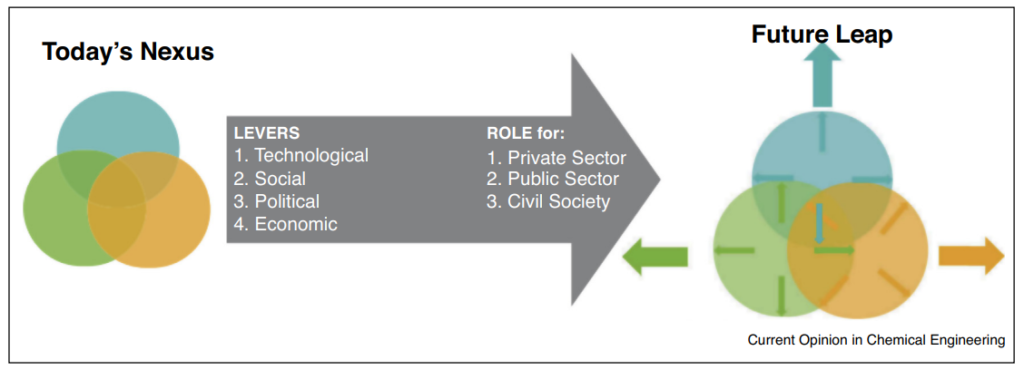
The 2030 goal for the implementation of the Sustainable Development Goals (SDGs) gives rise to challenging questions stemming from the inherent interconnections and potential competition between primary resources. ‘Economic Growth’ and ‘Clean Water and Sanitation’ are intimately related SDGs. Access to quality water is critical to growth, but as economies and populations grow, so does […]
Trade-offs and Decision Support Tools for FEW Nexus-Oriented Management
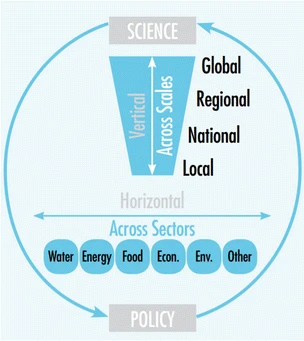
Purpose Existing assessment and decision support tools have limited application to real-world food-energy-water (FEW) Nexus challenges. Integrated assessment approaches are often discipline-specific or highly theoretical, lacking grounding in real-world FEW issues. Recent Findings FEW systems require application of integrated techniques that address multiple attributes of trade-off analyses, dynamic and disparate datasets, and difficult decision contexts. […]
Water-Energy-Food Nexus Framework for facilitating multi-stakeholder dialogue
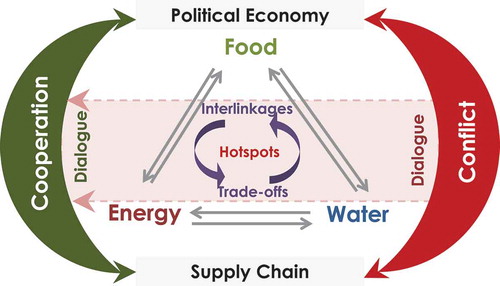
“Link to full article”
Water–energy–food (WEF) Nexus Tool 2.0: guiding integrative resource planning and decision-making
The paper introduces a framework and set of methodologies that define the linkages between the interconnected resources of water, energy and food, and enable explicit corresponding quantifications. The paper presents a new water–energy–food (WEF) Nexus modelling tool (WEF Nexus Tool 2.0) based on that framework which offers a common platform for scientists and policy-makers to […]
Renewable Energy in the Water, Energy & Food Nexus
Renewable energy technologies can address trade-offs between water, energy and food, bringing substantial benefits in all three key sectors. This report from the International Renewable Energy Agency (IRENA) looks at how adopting renewables can ease trade-offs by providing less resource-intensive energy services compared to conventional energy technologies. “Link to full article”
Bridging the Water and Food Gap: The Role of the Water-Energy-Food Nexus
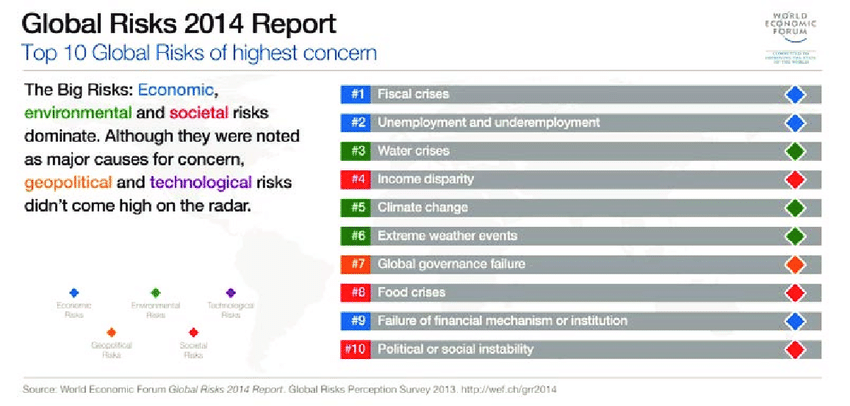
The paper introduces global resources challenges and their risks and shifts in what society defines as global securities. The paper will then introduce the water-energy-food nexus as a resource integration platform and will highlight green water as a hotspot in this nexus. Analysis will focus on the manner in which green water should be viewed […]
A Platform for Trade-off Analysis and Resource Allocation The Water-Energy-Food Nexus Tool and its Application to Qatar’s Food Security
This paper was commissioned as part of the Valuing Vital Resources research series focused on the Arab Gulf region. All countries in the region have a sensitive and interlinked relationship between oil, gas, water and food. This means policy to achieve sustainability in one area must also take into account its effects on others. Many […]
The water, energy and food (WEF) nexus project: A basis for strategic planning for natural resources sustainability-Challenges for application in the MENA region. Geophysical Research Abstracts.
Water, energy, and food (WEF) are viewed as main systems forming a nexus, which itself is threatened by defined external factors mainly characterized by growing population, changing economies, governance, climate change, and international trade. Integrative thinking in strategic planning for natural resources comes through recognizing the intimate level of interconnectedness between these systems and the […]
Water, energy, and food: The Ultimate Nexus
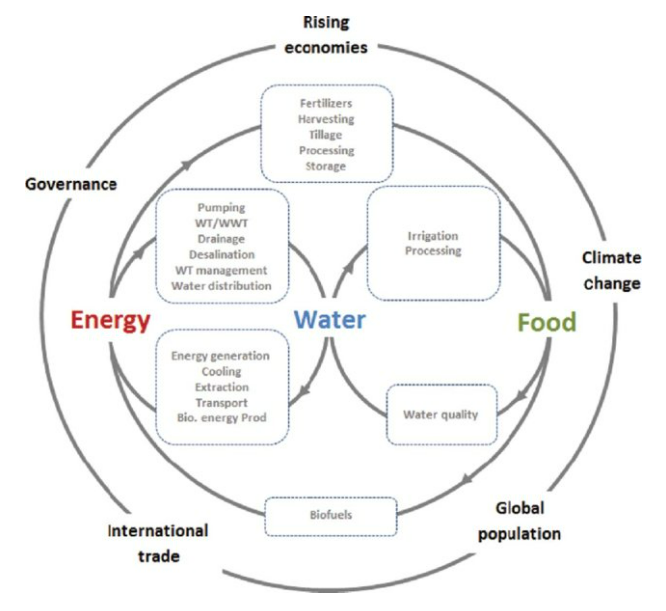
Our global community is facing unprecedented risks and challenges that are directly linked to the way we currently understand and manage our resources. Providing sustainable solutions to overcome present challenges poses the need to study the existent interlinkages between these resources. This entry presents water, energy, and food as the main systems that form a […]