Towards bridging the water gap in Texas: A water-energy-food nexus approach
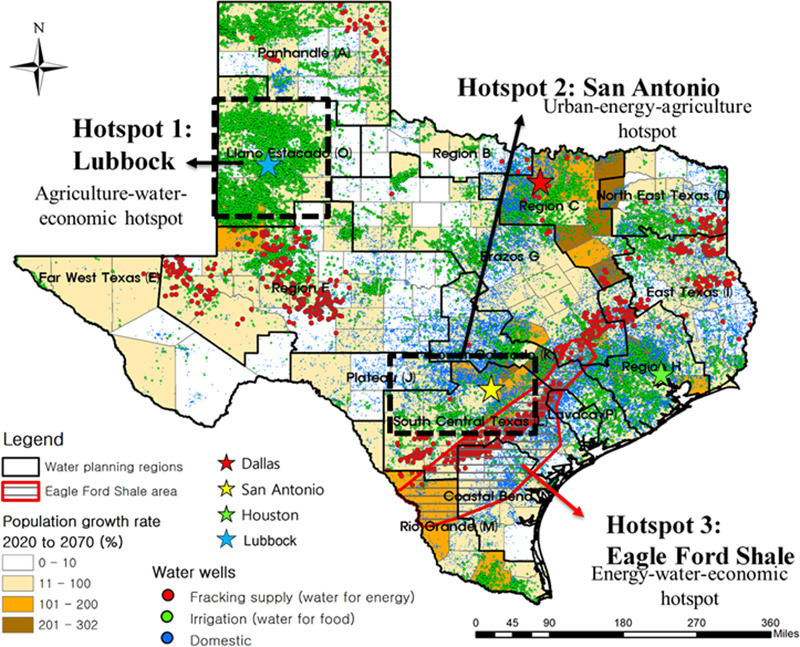
The 2017 Texas Water Development Board’s State Water Plan predicts a 41% gap between water demand and existing supply by 2070. This reflects an overall projection, but the challenge will affect various regions of the state differently. Texas has 16 regional water planning zones characterized by distinct populations, water demands, and existing water supplies. Each […]
ASSESSING THE SUSTAINABILITY OF CROP PRODUCTION IN THE GEDIZ BASIN, TURKEY: A WATER, ENERGY, AND FOOD NEXUS APPROACH

This study assesses the sustainability of crop production system in Gediz Basin, Turkey and develops forward-looking scenarios for optimal utilization and sustainable allocation of its resources using the water, energy, and food (WEF) Nexus holistic systems approach. Gediz basin data for the year 2014 are used to analyze the current situation and to develop future […]
Lessons learned: Creating an interdisciplinary team and using a nexus approach to address a resource hotspot

Moving resource management and allocation away from sectoral silos to a paradigm founded in integration and leveraging cross-sectoral and trans-disciplinary synergies will result in expanded opportunities for economic development and improved social well-being (Mohtar, 2017; Mohtar and Daher, 2017). Interventions to address complex resource challenges must identify opportunities while cognizant of holistic, system level trade-offs […]
Water–energy–food nexus: a platform for implementing the Sustainable Development Goals

This high- level panel was partially supported by the Texas A&M WEF Nexus Initiative, BMZ, European Union, and respective co-author institutions (American University of Beirut, OCP Policy Center, University of Zaragoza, Global Environmental Facility, Circle of Blue, Stockholm Environment Institute, National Scientific and Technical Research Council, International Commission on Irrigation and Drainage, World Bank, and […]
Developing Socio-Techno-Economic-Political (STEP) Solutions for Addressing Resource Nexus Hotspots
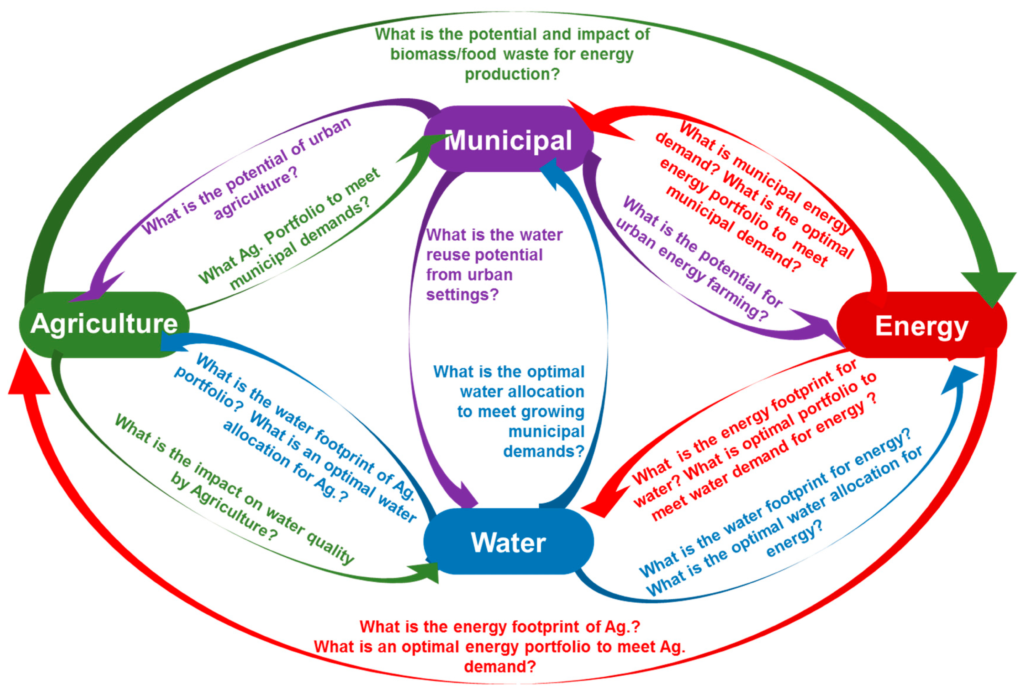
The challenge of meeting increasing water, energy, and food needs is linked not only to growing demands globally, but also to the growing interdependency between these interconnected resource systems. Pressures on these systems will emerge to become hotspots with different characteristics, and will require a fresh look at the challenges existing both within each of […]
Governance of the Water-Energy-Food Nexus: the Conceptual and Methodological Foundations for the San Antonio Region Case Study

Purpose of Review The goal of the case study is to provide an outline of the “governance” group’s approach to conducting research on nexus issues in this case study. Recent Findings A significant part of the Texas A&M Water-Energy-Food Nexus initiative focuses on issues of governance and public policy. The governance and public policy element […]
Beyond zero sum game allocations: expanding resources potentials through reduced interdependencies and increased resource nexus synergies
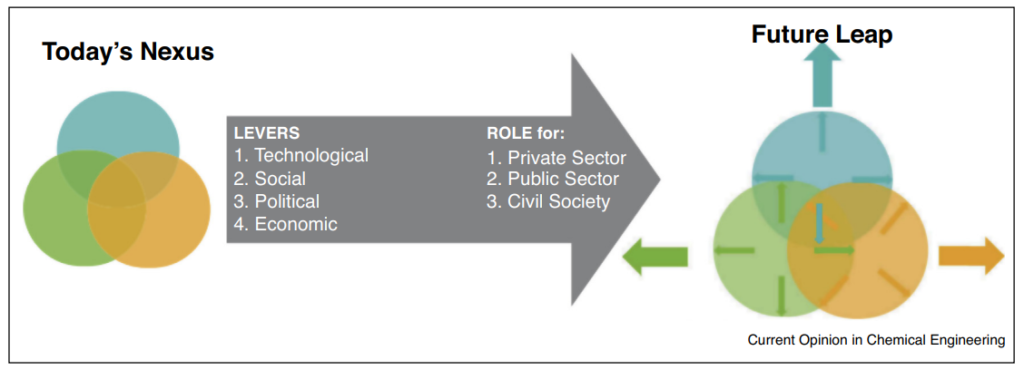
The 2030 goal for the implementation of the Sustainable Development Goals (SDGs) gives rise to challenging questions stemming from the inherent interconnections and potential competition between primary resources. ‘Economic Growth’ and ‘Clean Water and Sanitation’ are intimately related SDGs. Access to quality water is critical to growth, but as economies and populations grow, so does […]
Trade-offs and Decision Support Tools for FEW Nexus-Oriented Management
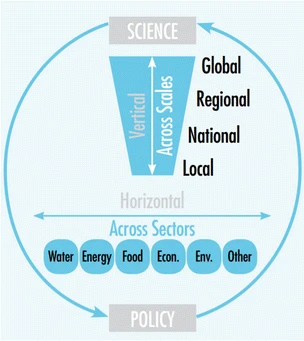
Purpose Existing assessment and decision support tools have limited application to real-world food-energy-water (FEW) Nexus challenges. Integrated assessment approaches are often discipline-specific or highly theoretical, lacking grounding in real-world FEW issues. Recent Findings FEW systems require application of integrated techniques that address multiple attributes of trade-off analyses, dynamic and disparate datasets, and difficult decision contexts. […]
Water-Energy-Food Nexus Framework for facilitating multi-stakeholder dialogue
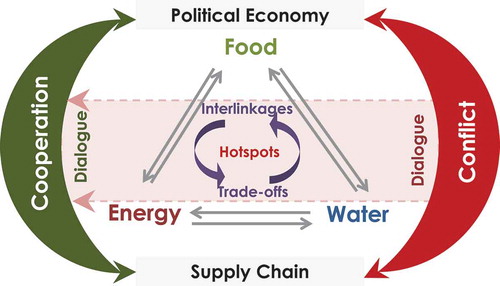
“Link to full article”
Water–energy–food (WEF) Nexus Tool 2.0: guiding integrative resource planning and decision-making
The paper introduces a framework and set of methodologies that define the linkages between the interconnected resources of water, energy and food, and enable explicit corresponding quantifications. The paper presents a new water–energy–food (WEF) Nexus modelling tool (WEF Nexus Tool 2.0) based on that framework which offers a common platform for scientists and policy-makers to […]