Advancing a people-centred systems approach to rural transformation

Rural transformation in the Near East and North Africa is ultimately driven by people and the institutions that support them. Family farmers, rural women and youth, cooperatives and producer organizations, rural entrepreneurs and service providers are key beneficiaries and primary actors shaping the future of agrifood systems in the region. Yet, rural areas continue to […]
India and the Gulf: A NewStrategy for Water, Energy,Food, and EcosystemSecurity

Water, energy, food, and ecosystems(WEFE) are deeply interconnected,and these linkages sit at the core oftoday’s most critical global securitychallenges. With climate pressures intensifying, cities expanding,and populations growing, the interconnections among agrifoodsystem transformation, energy transition, integrated watermanagement, and land governance are not parallel agendas.They shape each other’s risks and opportunities in ways thatdetermine whether communities move […]
Research Opportunities to Advance Cardiovascular Health through a Planetary Health Lens
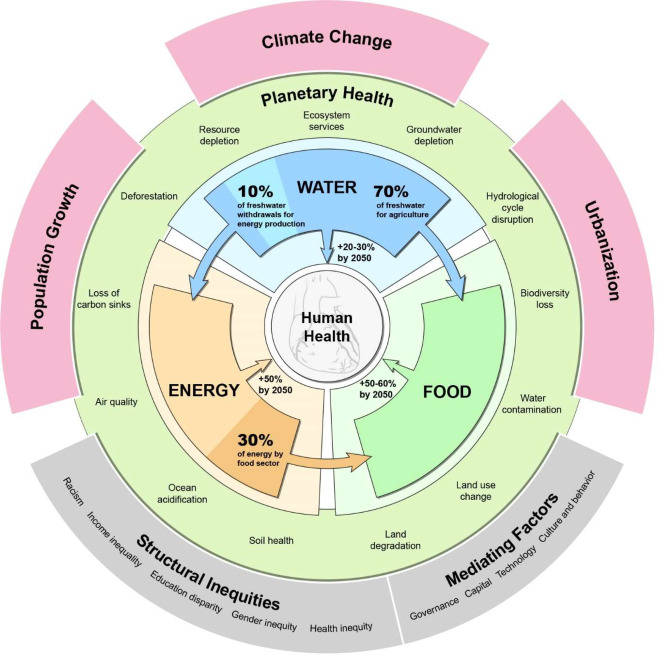
Cardiovascular health (CVH) across the life course requires stable, nurturing environments and a healthy planet. Increasing human demands on the earth’s resources destabilize our world’s ecosystems and compromising CVH. Unique research opportunities for cardiovascular researchers exist at the intersection of planetary and CVH. Using systems thinking can reveal cardiovascular and planetary health connections and mechanisms […]
What “Nexus”? Towards Resource Nexus standardization (Policy Brief No. 1). United Nations University Institute for Integrated Management of Material Fluxes and of Resources (UNU-FLORES).
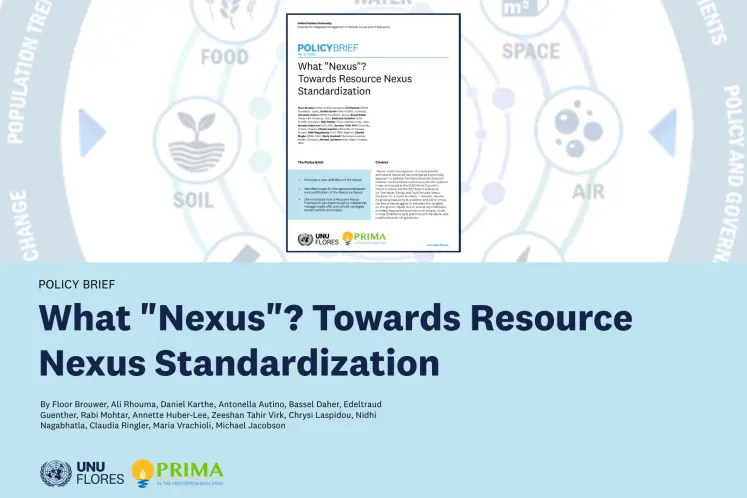
Following the Dresden Nexus Conference in 2025, which also marked its 10th anniversary, a policy brief was developed by researchers from the Nexus community. The development of the Policy Brief was led by UNU-FLORES and PRIMA. The policy brief is titled “What ‘Nexus’? Towards Resource Nexus Standardization.” Read full policy brief: What “Nexus”? Towards Resource Nexus […]
Context matters: A framework for assessing the suitability of climate smart agriculture technologies for smallholder farmers
This chapter presents a framework for climate-smart technology adoption that emphasizes the critical role of contextual factors in shaping agricultural resilience. It highlights how socioeconomic conditions, policy environments, and resource availability vary significantly across countries, which ultimately needs to reflect on the choice of technologies to be adopted. The framework synthesizes nine key indicators and […]
Synergetic Benefits of Agricultural Sewage Reuse and Floating Photovoltaics in Mexican Wastewater System: A Municipal‐Level WEF Nexus Study
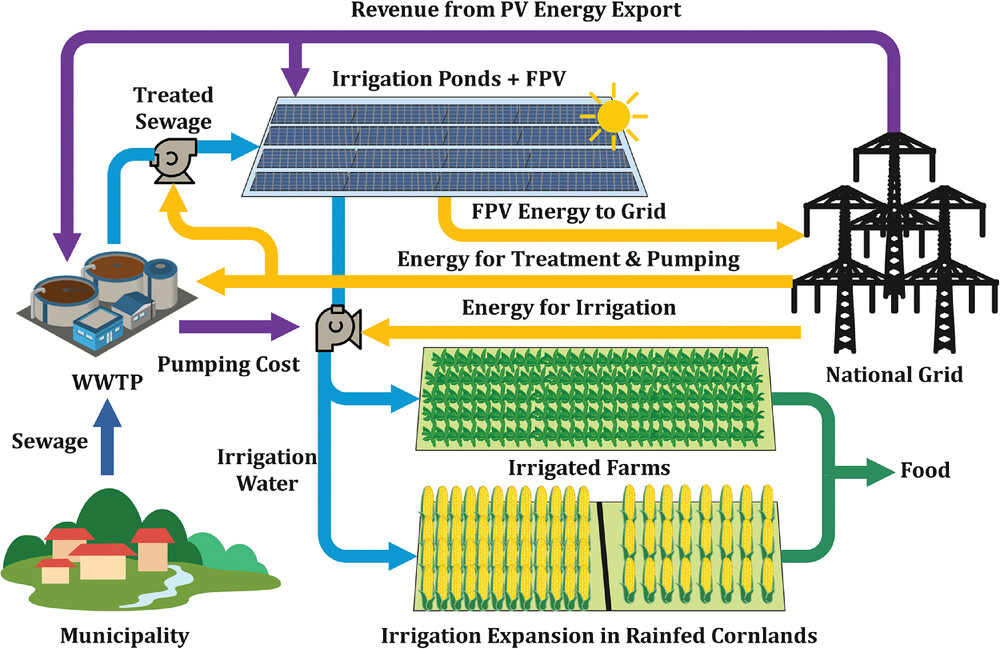
Financial stability is essential for the sustainable operation of wastewater treatment plants (WWTPs), as they require substantial resources but generate minimal revenue. In Mexico, a lack of funding resources and supporting policies has resulted in inefficient treatment and extensive surface water degradation. This work examines the positive impacts of treated sewage-operated irrigation ponds equipped with […]
Higher Education’s Dual Role in the AI Economy: Balancing Foundational Learning and Micro-Credential Innovation
The global rise of micro-credentials presents an agile solution for targeted technical upskilling, yet most artificial intelligence (AI)-related micro-credentials are offered by private sector organizations and emphasize technical skills. International bodies like the Organization for Economic Co-operation and Development and the European Commission have created frameworks emphasizing the critical importance of AI literacy for primary […]
Toward Community-Engaged Sustainable Development Goals Localization: San Antonio, TX

Sustainable urban development requires locally relevant strategies that respond to complex challenges of climate change, inequality, and rapid population growth. This paper demonstrates how the Sustainable Development Goals (SDGs) can serve as a guiding framework for city-level planning, applied through participatory approaches. We leveraged expert stakeholder engagement and broad public participation in San Antonio, TX, […]
From Data to Decisions: Water-Energy-Food-Environment (WEFE) Nexus Modeling Under Changing Climate
Transforming data into actionable insights is crucial for building resilient and sustainable water, energy, food, and environmental systems. However, the accelerating impacts of climate change are reshaping the dynamics of WEFE systems, intensifying resource interdependencies, and challenging conventional resource planning approaches. To navigate this complexity, decision-makers increasingly need integrated modeling frameworks that reflect cross-sectoral linkages […]
Integrating Health in the Water-Energy-Food Nexus: A Comprehensive Review of Interdependencies, Challenges, and Future Research Opportunities
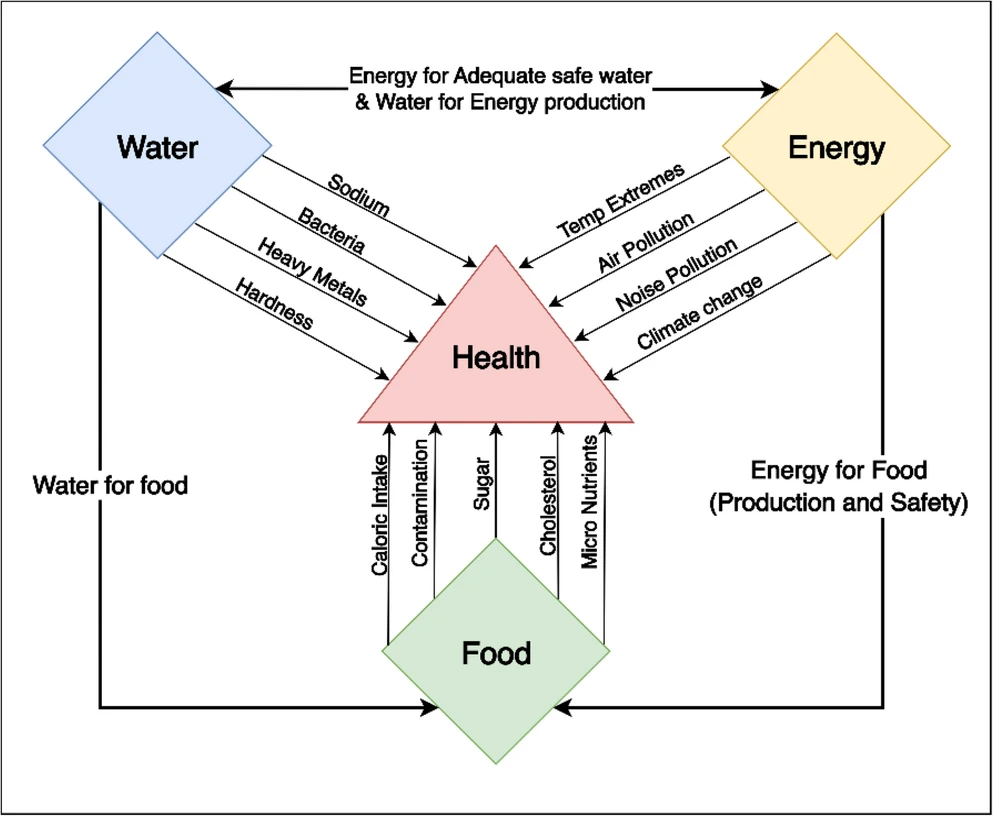
The Water-Energy-Food (WEF) Nexus has become a crucial framework for understanding resource interdependencies, nevertheless its integration with health remains underexplored. This review paper examines the current literature in the Water Energy Food Health (WEFH) Nexus, emphasizing the complex relationships between resource security and public health outcomes. Through a systematic literature review, the existing research trends, […]