Analyzing FEW nexus modeling tools for water resources decision-making and management applications

Social changes such as growing population, urbanization, globalization, and economic growth, compounded with uncertainties due to climate change are expected to result in substantial shifts in the demand for food, energy, and water. Food, energy and water resource systems are tightly interconnected. Addressing challenges facing any of these resource systems requires a holistic understanding and […]
Toward understanding the convergence of researcher and stakeholder perspectives related to water-energy-food (WEF) challenges: The case of San Antonio, Texas

In the past decade, research on interconnected resource challenges has primarily focused on quantifying physical resource interconnections, and there is a growing focus on the social, economic, and policy dimensions of these interconnections. While the nature of the complexity of interconnected resource challenges resulted in emphasizing the need for inter- and trans-disciplinary research and in […]
A Water-Energy-Food Nexus approach for conducting trade-off analysis: Morocco’s phosphate industry in the Khouribga region
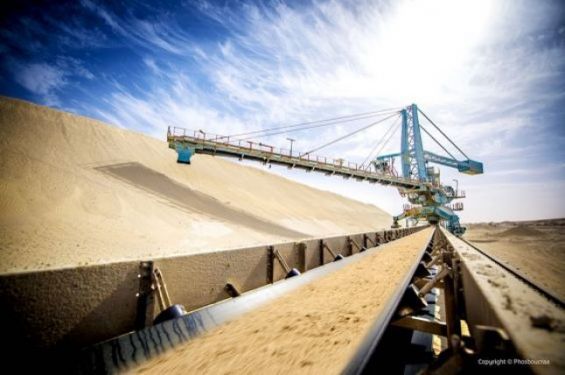
The study objective was to develop and use the Water-Energy-Food Nexus Phosphate (WEF-P) Tool to evaluate the impact of Morocco’s phosphate industry on water, energy, and food sectors of Khouribga, which is the representative phosphate mining region of Morocco. The developed WEF-P Tool enabled a trade-off analysis based on integrating supply-chain processes, transportation, and water–energy […]
The United Nations World Water Development Report 2020 : water and climate change
The 2020 edition of the United Nations World Water Development Report (UN WWDR 2020) entitled ‘Water and Climate Change’ aims at helping the water community to tackle the challenges of climate change and informing the climate change community about the opportunities that improved water management offers in terms of adaptation and mitigation. The scientific evidence […]
Toward creating an environment of cooperation between water, energy, and food stakeholders in San Antonio

The San Antonio Region is home to a rapidly growing population with developing energy and agricultural sectors competing for water, land, and financial resources. Despite the tight interconnectedness between water, energy, and food challenges, little is known about the levels of communication and coordination among the various officials responsible for making the decisions that affect […]
Complexity versus simplicity in water energy food nexus (WEF) assessment tools

Approaching water, energy, and food, as interconnected system of systems, as an alternative to traditional silo-based resources planning and management approaches continues to fall short of expectations of its research-backed benefits. The lack of nexus applications in policy and decision making can be related to numerous factors, with the main barrier being the complex nature […]
Economic, social, and environmental evaluation of energy development in the Eagle Ford shale play
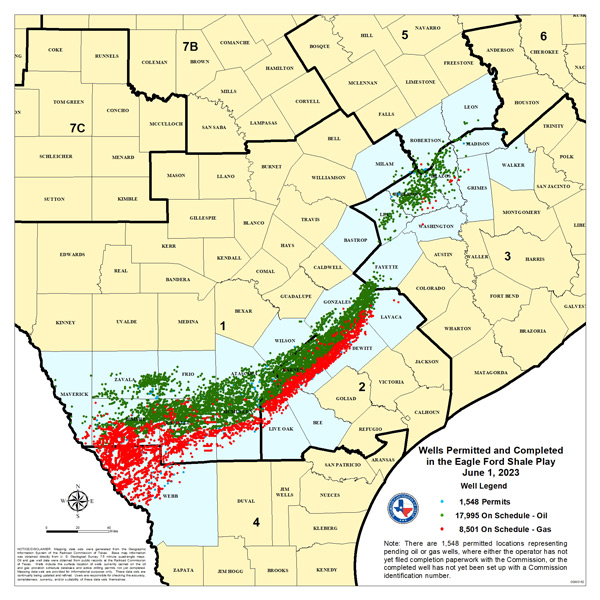
This research investigates the relation between water, energy, and transportation systems, using the growing hydraulic fracturing activity in the Eagle Ford shale play region of southwest Texas in which the local water systems and road infrastructure were not designed for the frequent transport of water into the production site and of produced gas and oil […]
Towards bridging the water gap in Texas: A water-energy-food nexus approach
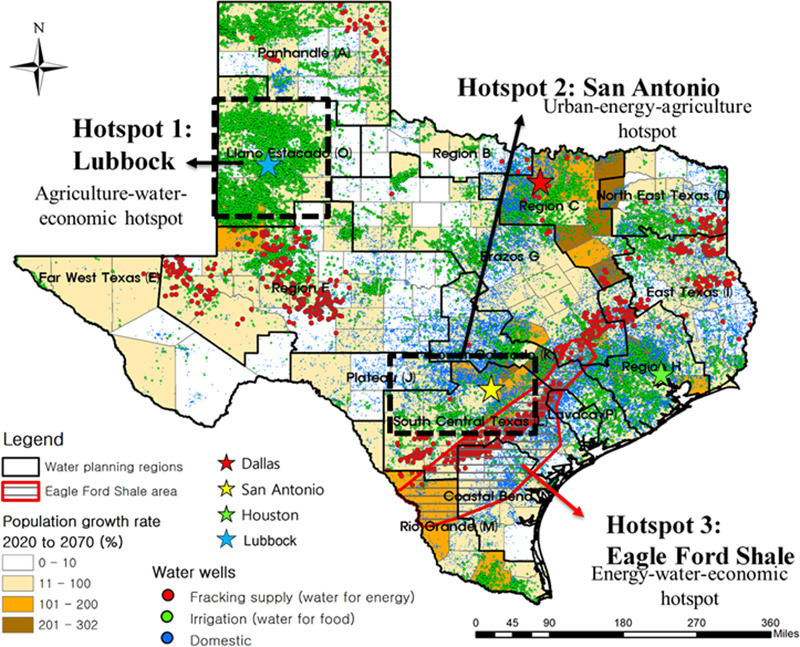
The 2017 Texas Water Development Board’s State Water Plan predicts a 41% gap between water demand and existing supply by 2070. This reflects an overall projection, but the challenge will affect various regions of the state differently. Texas has 16 regional water planning zones characterized by distinct populations, water demands, and existing water supplies. Each […]
ASSESSING THE SUSTAINABILITY OF CROP PRODUCTION IN THE GEDIZ BASIN, TURKEY: A WATER, ENERGY, AND FOOD NEXUS APPROACH

This study assesses the sustainability of crop production system in Gediz Basin, Turkey and develops forward-looking scenarios for optimal utilization and sustainable allocation of its resources using the water, energy, and food (WEF) Nexus holistic systems approach. Gediz basin data for the year 2014 are used to analyze the current situation and to develop future […]
Lessons learned: Creating an interdisciplinary team and using a nexus approach to address a resource hotspot

Moving resource management and allocation away from sectoral silos to a paradigm founded in integration and leveraging cross-sectoral and trans-disciplinary synergies will result in expanded opportunities for economic development and improved social well-being (Mohtar, 2017; Mohtar and Daher, 2017). Interventions to address complex resource challenges must identify opportunities while cognizant of holistic, system level trade-offs […]