Analyzing FEW nexus modeling tools for water resources decision-making and management applications

Social changes such as growing population, urbanization, globalization, and economic growth, compounded with uncertainties due to climate change are expected to result in substantial shifts in the demand for food, energy, and water. Food, energy and water resource systems are tightly interconnected. Addressing challenges facing any of these resource systems requires a holistic understanding and […]
Toward understanding the convergence of researcher and stakeholder perspectives related to water-energy-food (WEF) challenges: The case of San Antonio, Texas

In the past decade, research on interconnected resource challenges has primarily focused on quantifying physical resource interconnections, and there is a growing focus on the social, economic, and policy dimensions of these interconnections. While the nature of the complexity of interconnected resource challenges resulted in emphasizing the need for inter- and trans-disciplinary research and in […]
A Water-Energy-Food Nexus approach for conducting trade-off analysis: Morocco’s phosphate industry in the Khouribga region
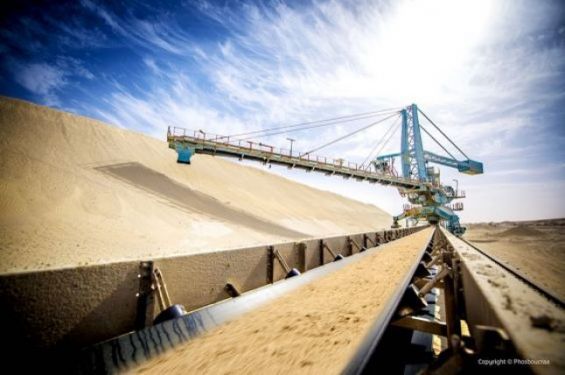
The study objective was to develop and use the Water-Energy-Food Nexus Phosphate (WEF-P) Tool to evaluate the impact of Morocco’s phosphate industry on water, energy, and food sectors of Khouribga, which is the representative phosphate mining region of Morocco. The developed WEF-P Tool enabled a trade-off analysis based on integrating supply-chain processes, transportation, and water–energy […]
The United Nations World Water Development Report 2020 : water and climate change
The 2020 edition of the United Nations World Water Development Report (UN WWDR 2020) entitled ‘Water and Climate Change’ aims at helping the water community to tackle the challenges of climate change and informing the climate change community about the opportunities that improved water management offers in terms of adaptation and mitigation. The scientific evidence […]